Two mandatory lists: the Bank of Mauritius sanctions guidance, and what it asks of you
The Bank of Mauritius issued updated guidance in August 2026 on obligations under the UN (Financial Prohibitions, Arms Embargo and Travel Ban) Sanctions Act 2019.
The Bank of Mauritius issued updated guidance in August 2026 on obligations under the UN (Financial Prohibitions, Arms Embargo and Travel Ban) Sanctions Act 2019.
Two lists, and one that is easy to miss
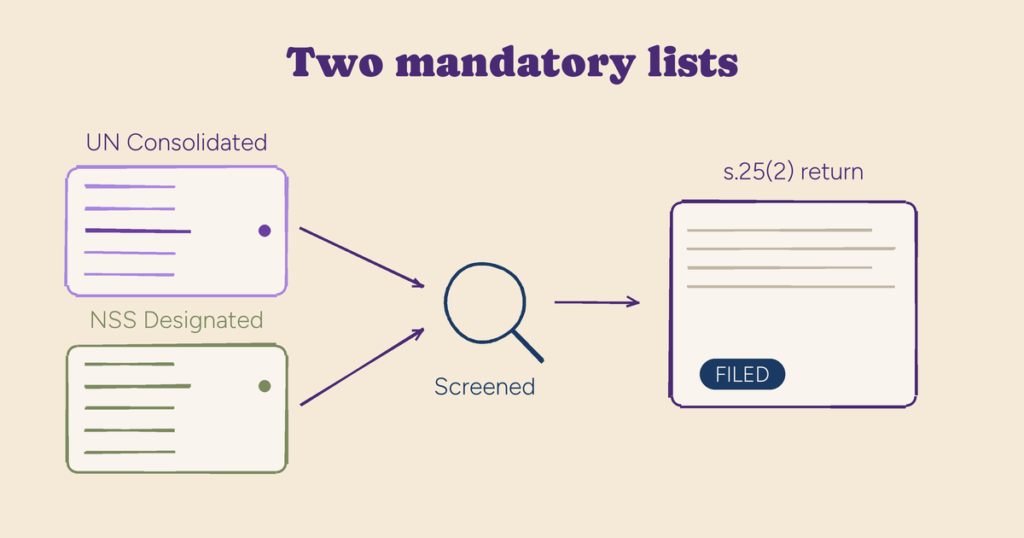
It makes two lists mandatory: the UN Security Council Consolidated List, and the National Sanctions Secretariat’s List of Designated Parties.
The second is published as a document on the NSS website and is not carried by the international watchlist feeds — so an institution screening solely against a global provider may not be screening it at all.
The guidance is specific about how, not just what
– Every client, on any change to either list — additions, removals, exemptions or amendments — within 24 hours of publication. – Both positive and negative match reporting — positive matches to the NSS and the Bank on the section 25(2) template, negative returns to the Bank, which states it monitors both. – Documented evidence of the screening and of the action taken on each result, produced to the Bank on request.
How SonarPulse maps to it
SonarPulse is a financial-crime compliance platform hosted inside Mauritius, so customer data never leaves the jurisdiction. Against this guidance specifically:
– Both mandatory lists — including the NSS designated parties, with the gazetted aliases and the passport, NID and date-of-birth identifiers the notice carries. – Screening on change, not on a schedule — the mandatory lists are polled hourly; a detected change screens your whole book within minutes and timestamps it, so “within 24 hours” is evidenced rather than asserted. – Every client by default, with exceptions you set deliberately, and a visible count of anyone outside the net. – An audit trail built for inspection — every screening, every alert, who reviewed it, what they concluded and why. – Wider coverage when you need it — OFAC, EU, UK, World Bank, Interpol and 250+ further sources available on demand for correspondent-banking and group-policy requirements, which sit outside this guidance but rarely outside your risk appetite. – Reports started for you — where a match is found, we generate the section 25(2) return in the Bank’s own template, pre-filled with everything the screening produced, so your MLRO completes it rather than beginning from a blank page. Negative returns we can complete in full.
The other limb
Transaction screening — the other limb of the guidance — is handled by TMX, our on-premises companion in the payment perimeter. We are happy to scope either or both.
A 24-hour obligation is not a reporting deadline you meet at the end. It is a control you have to be able to show working.
We would suggest a 45-minute session in which we screen a sample of your own customer book against both mandatory lists and show you, name by name, what a 24-hour cycle and its audit trail look like. No obligation, and you keep the output. Request a compliance health check.